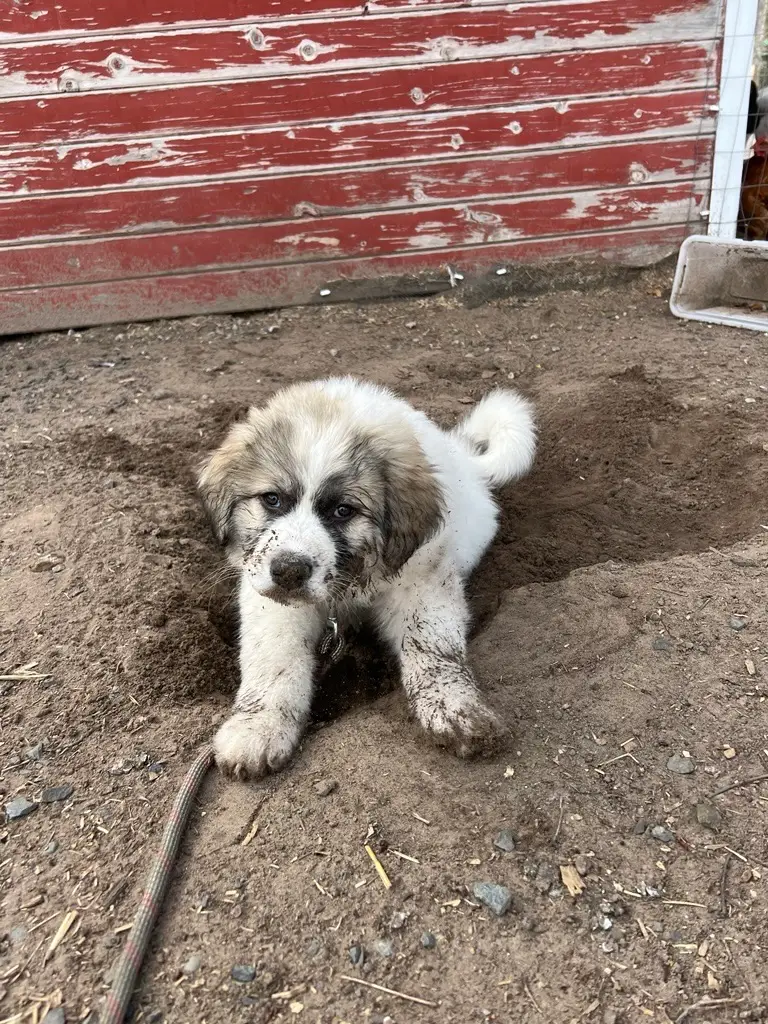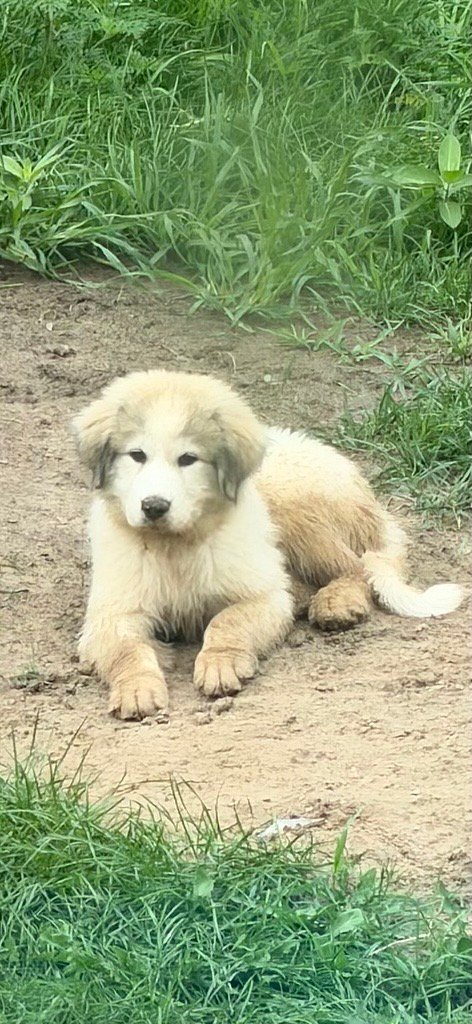
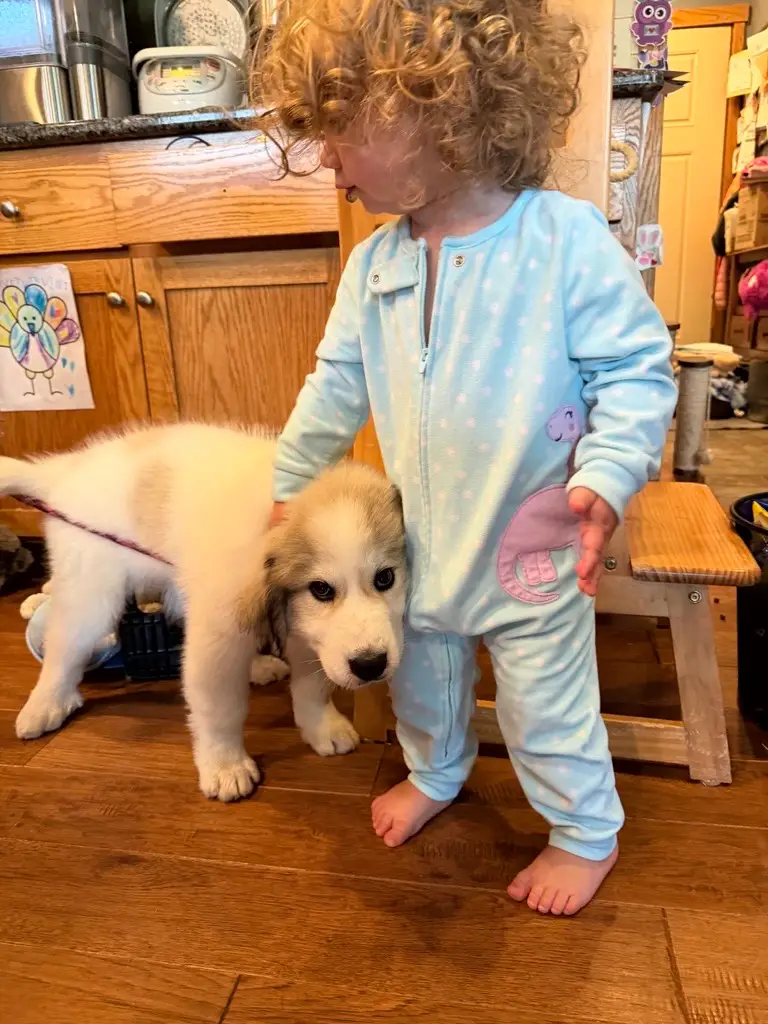
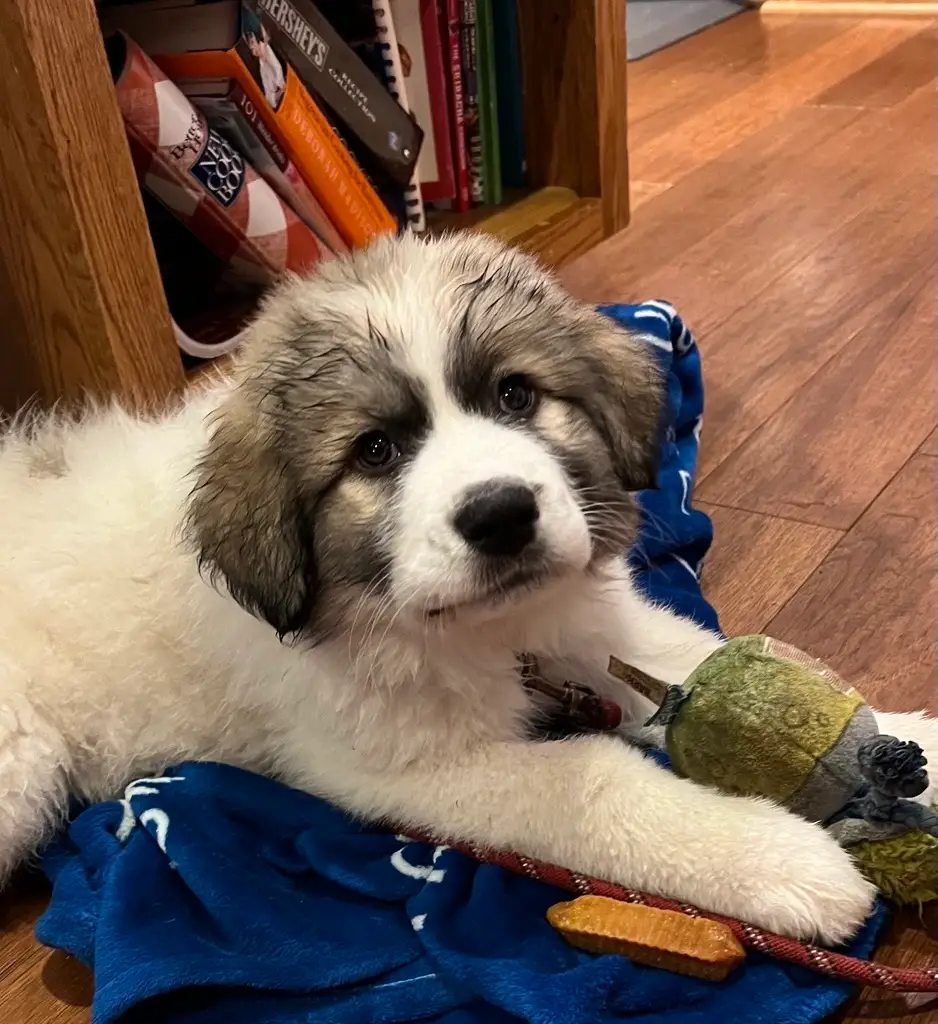
Great Pyrenees in Columbus, MN!
Thank you so much for your interest in our pyrs! Our pyrs are both working livestock guardian dogs and important members of our family. They are loved on by our kiddos but their main job is to protect our goats, chickens, and barn kitties (and they take all of their jobs very seriously!) We are a very small, home-based operation and our puppies are raised with us in our home and as we are working on our farm. It is our goal to prepare healthy, well-socialized puppies that can be a great asset to any family or farm. Below we have some general info on the Great Pyrenees breed. You can find more information on our adult dogs and any available puppies on their specified pages. Please connect with us directly if you have any questions (pollyjojack@gmail.com, 218-940-1932).
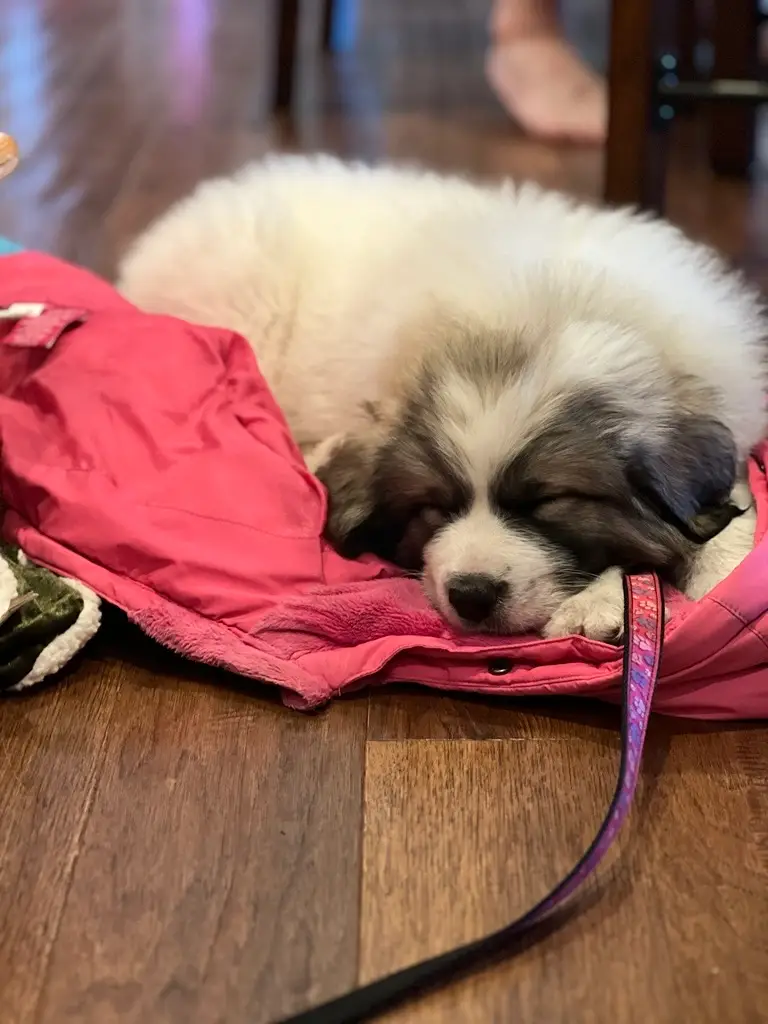
Historical introduction to how the Pyr is used today
The Great Pyrenees is a large, powerful working dog bred to deter sheep-stealing wolves and other predators on the snowy Pyrenees mountains that separate Spain and France. Pyrs are known to have a zen-like calm but can spring into action to meet a threat. Their lush, weatherproof coat is white with or without markings. They are a very old breed, and skeletal remains of Pyrenees have been found as far back as the Bronze Age (1800-1000 B.C.). They were named the Royal Dog of France in the 1600's by King Louis XIV and sought after by by nobility. However, they were mostly known as a peasant's dog. When they weren't out working the flocks, they were laying on the mat in the front doorway waiting for their shepherd. The first pair of Pyrenees were brought to the US in 1824 by General Lafayette.
In the late 1800's and early 1900's, the breed had deteriorated due to a vanishing of the natural predator foes in the mountains and issues with unscrupulous breeders in the region. French advocates of the breed searched the mountains and formed breeding kennels to bring integrity back to the breed and perpetuate interest in the breed. However, the breed continued to decline after World War I. A few dedicated breeders worked to restore it to its former glory and formed the Reunion des Amateurs de Chiens Pyreneans, which still exists today. This club wrote a breed standard in 1927, which has served as a basis for all current standards of the breed. In 1931, the first serious kennel launched in the US with the founding of Basquaerie Kennels in Massachusetts. They imported high quality stock out of Europe just before the continent was closed during World War II. The AKC officially recognized the Great Pyrenees in February of 1933.
Today, the Pyrenees is a working dog as well as a loving companion and family dog. These versatile dogs can function as dedicated livestock guardian dogs on farms and ranches as well as trusted and beloved member of the family. They can make excellent therapy dogs, rescue dogs, and more. They may be wary of strangers when they are working (at home), but they adapt easily to other situations such as dog shows, hospitals, with children, etc.
Pyrs on our farm are working livestock guardians and protectors of our chickens, cats, and goats. Before getting ours Pyrs, it was typical for us to lose 12-15 chickens a year to foxes and coyotes. Still at night it is more often than not that we hear large packs of coyotes right nearby our farm. We have even had coyotes and foxes approach us during broad daylight. After we got our goats and made some significant investments in our goat herd, we decided it was time to protect our investment (and ourselves!). Our kids were used to losing the chickens, but there was no way we were going to lose these soft, sweet, baby goats. So, we jumped in feet first! We got our first girl, Phoebe, from UpNorth Pyrenees in 2024 and our stud Gus in 2026. We have been amazed how steadfast they are and how naturally they fit right into protecting our farm.
Health Testing at ChucklePuff Farms
One of the most important aspects of being an ethical breeder is a commitment to the health and betterment of our breed. The Great Pyrenees Club of America in partnership with the Orthopedic Foundation for Animals (OFA) and the Canine Health Information Center (CHIC) has stressed that all breeding animals should be tested for a variety of conditions that can affect the breed. This includes hip and elbow dysplasia, eye disorders, luxating patellas, and neurological and immune-mediated disorders.
Here at ChucklePuff Farms we follow this guidance and complete the following screenings in all breeding animals prior to breeding:
OFA evaluation at 24 months or older for:
Elbow Dysplasia - X-rays to rule out elbow abnormalities
Hip Dysplasia - X-rays to confirm strong, healthy hips
Patellar Luxation - X-rays to ensure kneecap stability
Cardiac Clearance - Echocardiogram of the heart after 12 months to confirm the heart is healthy.
Eye Examination (CAER) - Annual exam by a veterinary opthalmologist for heritable eye disorders
Embark Genetic Panel - Includes screening for Degenerative Myelopathy (DM), Canine Multifocal Retinopathy (CMR1), Glanzmann's Thrombasthenia (GT), and other breed-relevant genetic conditions.
Neuronal Degeneration (NDG) -DNA test that screens for a rare, inherited neurodegenerative disorder